
Best ICU and Critical Care Hospital
We treat the most complex and critically ill patients, bringing together state-of-the-art medical equipment, rapid-response emergency protocols, and a multidisciplinary team of highly experienced intensivists (critical care doctors). With all diagnostic and life-support facilities available under one roof, we ensure that your loved ones receive seamless, uninterrupted, and world-class medical attention when they need it most.
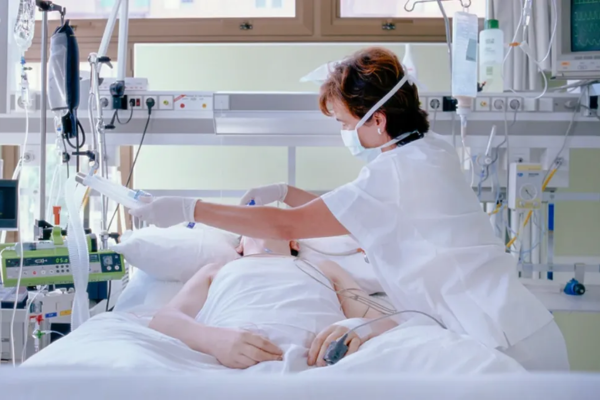
What is Intensive Care Unit (ICU) Care?
We handle extreme health problems where a patient’s vital organs are failing and require immediate mechanical or pharmacological support to sustain life. Given Panipat’s location on the bustling NH-44 (GT Road), our region frequently sees high-impact road traffic accidents, alongside a rising prevalence of severe cardiac and respiratory emergencies across Haryana. Our ICU is uniquely equipped to manage these high-stakes regional health challenges instantly.
Here is a patient-friendly guide to the advanced life-saving equipment we use, how it helps your loved ones, and why our technological superiority makes IPIMS the best critical care hospital in Panipat.
A mechanical ventilator is one of the most critical machines in an ICU. It is essentially an artificial lung. When a patient’s brain or lungs are too weak or damaged to breathe independently—due to severe pneumonia, brain trauma, or a massive heart attack—this machine takes over the work of breathing completely.
- How It Is Useful: A tube is gently placed into the patient’s windpipe (intubation), and the ventilator pushes a precise, customized mixture of oxygen and air into the lungs. It ensures the brain and vital organs never run out of oxygen.
- Why IPIMS is the Best: We don’t just use standard ventilators; our IPIMS ICU features the latest generation of smart ventilators. These machines automatically sense the patient’s own breathing efforts and adjust the air pressure microsecond by microsecond. This prevents lung damage and helps the patient wake up and breathe on their own much faster than older machines.
Above every single bed in our ICU, you will see a complex digital screen. This is the multi-parameter monitor, acting as the eyes and ears of our critical care doctors and nurses.
- How It Is Useful: It continuously tracks the patient’s most vital signs in real-time: heart rhythm (ECG), blood oxygen levels (SpO2), respiratory rate, and blood pressure. It acts as an early warning system.
- Why IPIMS is the Best: At IPIMS Panipat, our monitors are fully networked to a central nursing station. This means that even if a nurse steps away from the bedside for a moment, the entire medical team is still watching your loved one’s heart rate on a central screen. Our alarms are calibrated to alert our doctors the exact millisecond a vital sign drops into a danger zone, guaranteeing zero delays in care.
In a critical care setting, medications cannot be given in simple pills or standard IV drips where a nurse counts the drops. Powerful, life-saving drugs (like those used to raise a crashing blood pressure or provide heavy sedation) must be given in exact, micro-milliliter doses.
- How It Is Useful: These computerized pumps deliver medications and nutrition directly into the bloodstream at a continuous, perfectly controlled rate.
- Why IPIMS is the Best: We utilize a “pump bank” system for every bed. Our highly calibrated, automated pumps ensure absolute zero human error in medication dosing. Whether it’s a micro-dose of adrenaline or exact insulin units for a diabetic emergency, our technology ensures your loved one gets exactly what they need, safely.
Not every patient with breathing trouble needs a tube in their throat. For patients suffering from severe asthma attacks, sudden heart failure, or COPD (Chronic Obstructive Pulmonary Disease), we use non-invasive ventilation.
- How It Is Useful: BiPAP and CPAP machines use a tightly fitted face mask to push pressurized, oxygen-rich air into the lungs. This pressure forces inflamed, tight airways open and helps clear fluid from the lungs without the need for invasive surgery or sedation.
- Why IPIMS is the Best: We believe in keeping treatments as comfortable as possible. Our critical care team in Haryana is highly trained in maximizing the use of non-invasive machines to prevent the need for full mechanical ventilation whenever safely possible, significantly speeding up the patient’s recovery time.
When a patient is on life support, their blood chemistry changes by the minute. An Arterial Blood Gas (ABG) test takes a tiny drop of blood from an artery to measure the exact levels of oxygen, carbon dioxide, and dangerous acid in the blood.
- How It Is Useful: It tells the ICU doctor exactly how well the lungs and kidneys are working and whether the ventilator settings need to be changed immediately.
- Why IPIMS is the Best: In many hospitals, blood samples are sent to a distant lab, wasting precious time. At IPIMS Hospital, our ABG analyzers are located inside the ICU itself. We get highly accurate results in less than 60 seconds, allowing our intensivists to make life-saving adjustments to treatments instantly.
Cardiac arrest (when the heart suddenly stops beating) is the ultimate medical emergency. Defibrillators are the machines you often see in movies, used to “shock” the heart.
- How It Is Useful: They deliver a highly controlled, massive dose of electrical energy to the chest to stop a fatal, chaotic heartbeat and allow the heart’s natural pacemaker to restart a normal, life-sustaining rhythm.
- Why IPIMS is the Best: Every zone of our ICU is equipped with advanced, instant-charge biphasic defibrillators. Furthermore, our devices come with external pacing capabilities. If a patient’s heart is beating dangerously slowly, we can use the machine to artificially set the heartbeat from the outside until a permanent pacemaker is surgically implanted by our Cardiology Department.
Severe infections (sepsis) or massive trauma can cause the kidneys to fail suddenly. When this happens, toxic waste and fluid build up rapidly in the blood, which is fatal.
- How It Is Useful: Hemodialysis machines act as an artificial kidney. Blood is pumped out of the body, passed through a highly advanced filter to remove toxins and excess water, and then returned safely to the patient.
- Why IPIMS is the Best: Critically ill patients usually have very low blood pressure and cannot survive standard, fast dialysis. IPIMS is one of the few hospitals in the Panipat and GT Road region to offer CRRT (Continuous Renal Replacement Therapy). This is a very slow, gentle, 24-hour dialysis performed right at the ICU bedside, saving the lives of the most unstable patients without dropping their blood pressure.
To treat a critically ill patient, doctors need to see what is happening inside the body—whether a lung has collapsed, the heart is failing, or there is internal bleeding. However, moving a patient on life support to the radiology department is incredibly dangerous.
- How It Is Useful: These mobile imaging machines are wheeled directly to the patient’s bedside to take instant pictures of the chest, abdomen, or heart.
Why IPIMS is the Best: We maintain 100% in-house, bedside diagnostics. Our intensivists use Point-of-Care Ultrasound (POCUS) as an extension of their stethoscope. This allows us to instantly visualize heart function, detect internal bleeding from road traffic accidents on NH-44, and guide life-saving needles safely into veins without ever shifting the patient from their bed.
When a patient suffers a massive heart attack, the heart muscle becomes too weak to pump blood to the rest of the body, a fatal condition known as cardiogenic shock.
- How It Is Useful: An IABP is a thin, long balloon inserted through an artery in the leg and placed right next to the heart. A computer inflates and deflates the balloon in perfect sync with the heartbeat, physically helping the heart push blood out to the body and resting the damaged heart muscle.
- Why IPIMS is the Best: The use of an IABP requires immense expertise. Our specialized cardiac ICU team is highly trained in deploying and managing this complex life-support device, offering a level of advanced cardiac critical care usually only found in major metropolitan hospital hubs like Delhi.
Patients in the ICU have compromised immune systems and open surgical wounds, making them highly vulnerable to hospital-acquired infections (HAIs).
- How It Is Useful: Instead of just a bed, critical patients (like severe burn victims or those with highly contagious diseases) are placed in specialized isolation rooms with High-Efficiency Particulate Air (HEPA) filters that constantly scrub the air of microscopic bacteria and viruses.
- Why IPIMS is the Best: Cleanliness is our absolute priority. We adhere to strict international protocols for infection control. By combining HEPA filtration, strict hand-hygiene rules, and specialized sterilization equipment, IPIMS maintains one of the lowest ICU infection rates in Haryana, ensuring your loved one heals in the safest possible environment.
Our Critical Care & ICU Services in Panipat
Advanced Life-Saving Equipment & Diagnostics
- Advanced Mechanical Ventilators: Life-support machines that act as artificial lungs, intelligently adjusting oxygen, pressure, and breathing patterns for patients who cannot breathe on their own due to critical illness.
- Multi-Parameter Bedside Monitors: Continuous real-time monitoring systems that track heart rate, ECG rhythm, oxygen levels (SpO₂), blood pressure, and respiratory rate with instant alarm alerts for any change.
- Infusion & Syringe Pumps: Highly precise computerized devices that deliver critical medications like sedatives, antibiotics, and blood pressure drugs in exact controlled doses to avoid any human error.
- Defibrillators & Temporary Pacing Devices: Emergency life-saving equipment used to restore normal heart rhythm through controlled electrical shocks or to support dangerously slow heartbeats.
- Arterial Blood Gas (ABG) Analyzer: A rapid bedside diagnostic tool that provides instant readings of oxygen, carbon dioxide, pH, and electrolytes to guide critical treatment decisions within seconds.
- Portable Ultrasound & Bedside X-Ray (POCUS): Mobile imaging systems that allow doctors to examine the heart, lungs, and abdomen without moving critically ill patients from the ICU bed.
Specialized Surgical & Non-Surgical ICU Treatments
- Endotracheal Intubation & Tracheostomy: Life-saving airway procedures where a breathing tube is inserted through the mouth (intubation) or directly into the windpipe through the neck (tracheostomy) for long-term ventilation support.
- Central Venous & Arterial Line Placement: Specialized procedures to insert deep vascular lines for administering critical medications, fluids, and continuous blood pressure monitoring in ICU patients.
- Bedside Hemodialysis & CRRT: Advanced kidney support therapies performed in the ICU to remove toxins and excess fluids from the blood in patients with sudden or severe kidney failure.
Why Patients in Panipat Trust IPIMS for Critical Care
When it comes to critical care, every second matters. At IPIMS Hospital, we combine advanced ICU infrastructure with expert medical supervision to deliver safe, fast, and life-saving treatment when it is needed the most.
- World-Class Life-Support Technology — Advanced ventilators, CRRT machines, and multiparameter monitors ensure care comparable to top metro ICUs.
- 24/7 Emergency & ICU Availability — Fully functional ICU, emergency, and trauma team available round-the-clock for all critical conditions.
- Highly Experienced Intensivists — Dedicated critical care specialists supported by trained ICU nurses with strict patient monitoring protocols.
- 100% In-House Diagnostics — Bedside ultrasound, portable X-ray, ABG analysis, and lab testing ensure zero delay in treatment decisions.
- Transparent & Ethical Billing — Clear daily ICU cost breakdown with no hidden charges and full explanation to patient families.
- Insurance & Government Panel Support — Cashless treatment available under Ayushman Bharat, CGHS, ECHS, and major private insurers.
- Prime GT Road Location — Easy emergency access from Panipat and nearby cities including Karnal, Sonipat, and Samalkha.
- Compassionate Communication — Clear explanation of every step in Hindi and English to keep families fully informed and reassured.
Your ICU Treatment Journey at IPIMS
The ICU environment can feel overwhelming, but understanding each step of care helps reduce anxiety. At IPIMS Hospital, we ensure complete transparency and continuous communication throughout the critical care journey.
Emergency Admission & Triage
On arrival via ambulance or emergency, the patient is immediately assessed for life-threatening conditions and shifted to the ICU without delay.
Immediate Stabilization
Life-saving measures such as airway support, ventilator connection, IV access, and blood pressure stabilization are initiated within minutes.
Continuous Monitoring & Diagnostics
The patient is connected to multiparameter monitors while bedside tests like ABG, ECG, blood work, and imaging are performed immediately.
Diagnosis & Treatment Plan
Our intensivists analyze all reports to identify the root cause and design a personalized, aggressive treatment strategy for recovery.
Critical Care Treatment Phase
The patient receives round-the-clock ICU care with continuous monitoring, ventilator support if needed, and daily progress updates to family members.
Recovery & Step-Down Care
Once stable, life-support is gradually reduced and the patient is shifted to HDU or ward for rehabilitation and continued recovery.
When Should You Seek Immediate Critical Care in Panipat?
Not every illness requires ICU admission, but recognizing early warning signs of a life-threatening condition can save lives. Do not delay if these symptoms appear.
- Persistent, extremely high fever not responding to medication
- Sudden confusion, delirium, or inability to recognize family members
- Drastic drop in blood pressure causing dizziness or fainting
- Persistent vomiting leading to severe dehydration and weakness
- Sudden extreme lethargy or difficulty staying awake
- Significant decrease in urine output over 24 hours
- Severe chest pain spreading to jaw or arm with sweating
- Inability to breathe, choking sensation, or bluish lips/face
- Unconsciousness or complete unresponsiveness
- Severe trauma including heavy bleeding or head injury
- Stroke symptoms like facial drooping, paralysis, or speech loss
Critical Care & Trauma Emergency at IPIMS — 24/7
📞 Emergency: 0180 66 55 000
💬 WhatsApp: +91 70566 67979Frequently Asked Questions — Critical Care Unit at IPIMS Panipat
Visit IPIMS Critical Care & ICU Department — Panipat
When critical moments strike, the highly trained intensive care team at IPIMS Hospital is standing by, ready to deploy the most advanced medical technology to save lives. We are centrally located and easily accessible for rapid emergency transport.
📍 Address
IPIMS Hospital, Main G.T. Road, Panipat, Haryana
🕘 Timings
ICU & Emergency Trauma Care: Open 24 Hours / 7 Days a week
👨⚕️ OPD Consultations
Monday to Saturday: 9:00 AM – 5:00 PM
📞 Call
+91 70566 67979
+91 70566 67979