
Laboratory and Diagnostic Services
Whether you need a routine blood sugar check, an urgent CT scan after an injury, or an advanced 3D MRI, you do not need to run to multiple different clinics across the city. Our 24/7 facility on GT Road is equipped with cutting-edge medical technology to ensure your doctors get crystal-clear insights to start your treatment immediately.
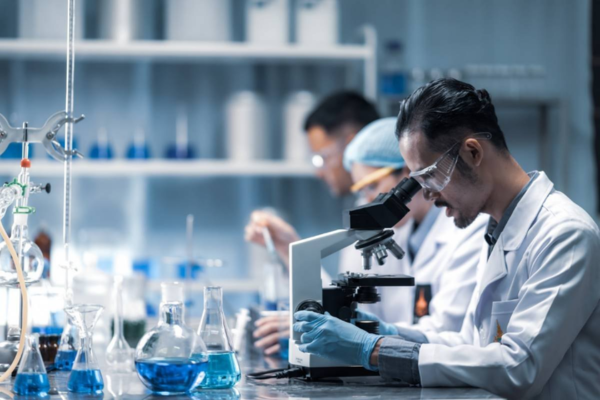
Why Accurate Diagnostics Matter?
Our department serves as the “eyes” of the hospital. We support every single specialty at IPIMS, from Cardiology to Orthopedics, ensuring that your treating doctor bases their decisions on hard, scientific data rather than guesswork.
This branch analyzes your blood and body fluids to measure the chemical balance of your body, including liver function, kidney function, cholesterol, and blood sugar levels.
How it is done: A gentle phlebotomist will draw a small blood sample from your arm in our hygienic collection room. The sample is placed into our fully automated in-house analyzers, which calculate the exact chemical levels. Routine reports are typically generated on the same day and sent directly to your doctor.
These tests identify the specific bacteria, viruses, or fungi causing an infection and detect antibodies your body produces to fight them (such as in Dengue or Typhoid).
How it is done: Depending on your symptoms, we gently collect a blood sample, urine, stool, or a throat swab. Our microbiologists place these samples in sterile incubators to physically grow and identify the exact germ. We then test various medications on the germ to tell your doctor exactly which antibiotic will work best.
Clinical pathology involves the detailed microscopic analysis of bodily fluids, most commonly urine and stool, to detect diseases, infections, or bleeding in the digestive or urinary tracts.
How it is done: You will be provided with a sterile, tightly sealed container and directed to our clean, private collection washrooms. Once you hand the sample back to our lab technicians, it is spun down and examined under high-power microscopes to look for hidden blood, parasites, or abnormal crystals.
Cytopathology studies individual cells to detect cancer, viral infections, or inflammatory diseases at a microscopic level. Common examples include the Pap smear for cervical screening or an FNAC (Fine Needle Aspiration Cytology) for lumps.
How it is done: For a lump (like a thyroid or breast nodule), a specialist doctor uses a very fine, thin needle to comfortably draw out a tiny amount of fluid or cells. For a Pap smear, cells are gently scraped from the surface. These cells are smeared onto a glass slide, stained, and deeply analyzed by our pathologists.
Haematology focuses on blood disorders, including anemia (low hemoglobin), infections, leukemia (blood cancer), and blood clotting issues.
How it is done: We draw a standard blood sample from your vein. The sample is run through our advanced automated cell counters, which instantly calculate your exact count of red blood cells, white blood cells, and platelets. If the machine detects anything unusual, our senior hematologists manually review a drop of your blood under a microscope.
While cytopathology looks at loose cells, histopathology involves examining a solid piece of tissue (a biopsy) to provide a definitive diagnosis, most commonly to check if a tumor is benign (safe) or malignant (cancerous).
How it is done: During a minor procedure or surgery in our IPIMS operation theatres, the surgeon removes a small piece of the suspicious tissue. This tissue is sent immediately to our lab, where it is preserved in wax, sliced thinner than a human hair, stained with special dyes, and carefully evaluated by a senior pathologist.
A 2 D Echo is an ultrasound of your heart. It allows cardiologists to see the heart valves, chambers, and blood flow in real-time to check for heart failure or valve disease.
How it is done: You will lie comfortably on an examination bed. A cardiologist or trained technician applies a warm, water-based gel to your chest and glides a handheld device (transducer) over your skin. You can watch your heart beating live on the monitor. It is completely painless and takes about 15 to 20 minutes.
Audiometry is a comprehensive hearing test used to determine the exact type and degree of hearing loss you may be experiencing.
How it is done: You will sit comfortably inside a soundproof booth and put on specialized headphones. Our audiologist will play a series of beeps and tones at various volumes and pitches. You simply press a button or raise your hand every time you hear a sound. The machine generates an audiogram, graphically mapping your hearing capacity.
Bronchoscopy is a specialized procedure that allows a pulmonologist (lung specialist) to look directly inside your airways and lungs to diagnose persistent coughs, infections, or blockages.
How it is done: Your throat is sprayed with a local anesthetic to numb it, and you are given mild sedation to keep you relaxed. The doctor gently passes a thin, flexible tube with a tiny light and camera through your nose or mouth into your lungs. They can visually inspect the airways and take small fluid or tissue samples if necessary.
A CT scan takes a rapid series of highly detailed 3D X-ray images, allowing doctors to view complex fractures, brain injuries, tumors, or internal bleeding that regular X-rays cannot show.
How it is done: You lie flat on a motorized bed that slowly slides into the center of a large, donut-shaped scanner. You will be asked to hold your breath for a few seconds while the machine spins quietly around you. The entire scan is completely painless, non-invasive, and is usually completed in under 5 minutes.
DSA is a highly advanced imaging technique used to visualize the blood vessels in your brain, heart, or limbs with extreme clarity, helping to detect blockages, aneurysms, or abnormal bleeding.
How it is done: A specialist carefully numbs your groin or wrist and inserts a tiny, flexible tube (catheter) into an artery. A special contrast dye is injected, and a rapid series of X-rays are taken. The computer digitally “subtracts” the bones and organs from the image, leaving a crystal-clear map of your blood vessels.
Spirometry is the most common lung function test. It measures how much air your lungs can hold and how forcefully you can exhale, which is essential for diagnosing Asthma or COPD.
How it is done: You will be given a sterile mouthpiece connected to a small machine. Our technician will ask you to take the deepest breath possible and then blow the air out into the tube as hard and as fast as you can for several seconds. The process is repeated a few times to ensure accurate results.
Also known as a Stress Test, TMT evaluates how your heart responds to physical exertion. It helps detect hidden coronary artery blockages that might not show up on a resting ECG.
How it is done: Sticky ECG sensor pads are placed on your chest. You will start by walking slowly on a treadmill. Every few minutes, the treadmill will gradually get faster and steeper. A doctor continuously monitors your heart rate, blood pressure, and ECG rhythm throughout the walk until you reach a target heart rate or feel tired.
An ECG is a quick, painless test that records the electrical signals of your heart. It is the first line of diagnosis for detecting irregular heartbeats (arrhythmias) or a Myocardial Infarction (Heart Attack).
How it is done: You will lie flat on a comfortable bed. A technician will place small, sticky electrode patches on your chest, wrists, and ankles. You simply lie still and breathe normally for about 60 seconds while the machine prints out a wave graph of your heart’s electrical activity.
These are advanced tests to evaluate your brain waves, nerves, and muscles.
- EEG (Electroencephalogram): Small sensors are pasted to your scalp to record brain wave activity, primarily diagnosing epilepsy or seizures.
- EMG (Electromyography): Tiny needles or sticky pads are used to evaluate the health of your muscles and the nerves controlling them.
- VEP & BERA: These painless tests use flashing screens or clicking headphones to measure how fast electrical signals travel from your eyes and ears to your brain.
A Holter Monitor is a small, portable ECG device that continuously records your heart’s rhythm for a full 24 to 48 hours to catch fleeting irregular heartbeats that a standard 2-minute clinic ECG might miss.
How it is done: A technician will attach small ECG electrodes to your chest and connect them to a battery-operated monitor roughly the size of a mobile phone, worn on a belt or strap. You go home and perform your normal daily activities, completely pain-free, returning the device to the hospital the next day for computer analysis.
An MRI uses powerful magnets and radio waves (not radiation) to create incredibly detailed, cross-sectional images of your body’s soft tissues, such as the brain, spinal cord, ligaments, and internal organs.
How it is done: You will lie on a padded table that slides into a well-lit, tube-like scanner. The machine makes loud knocking noises during the scan, so we provide you with comfortable earplugs or headphones. You must lie perfectly still for about 20 to 45 minutes while the highly detailed images are captured.
This is a specialized test to see how well your bladder and sphincter muscles hold and release urine, helping diagnose causes of urinary incontinence (leakage) or difficulty passing urine.
How it is done: A urologist will gently insert a very thin, flexible tube (catheter) into your bladder. Through this tube, your bladder is slowly filled with sterile water. The machine carefully measures the pressure and volume inside your bladder as it fills up and as you are asked to empty it.
Ultrasound uses high-frequency sound waves to capture live images from the inside of your body. It is completely safe, radiation-free, and commonly used to examine the abdomen, kidneys, thyroid, or to monitor a baby during pregnancy.
How it is done: You will lie on an examination table, exposing the area to be checked. A radiologist applies a clear, warm gel to your skin, which helps transmit sound waves. They then glide a smooth handheld probe firmly over the gel, displaying real-time images of your internal organs on a monitor next to the bed.
An X-ray is a fast, highly effective imaging test that uses a very small, safe burst of radiation to create pictures of the dense tissues inside your body, primarily used to spot bone fractures, joint dislocations, or chest infections like pneumonia.
How it is done: You will be asked to stand against a digital plate or lie on an X-ray table, depending on the body part being checked. Our radiographer will position you precisely, step behind a protective screen, and ask you to hold your breath for just one second. The digital image is produced instantly.
Advanced Diagnostic Imaging & Testing Services
Diagnostic Services
- Intraoral Cameras: Tiny, pen-sized high-definition cameras that project live, magnified images of your teeth onto a screen, allowing the doctor to clearly explain the problem to you in real-time.
- Digital Radiography (RVG X-rays): Advanced digital X-rays that instantly capture highly detailed images of individual teeth with up to 90% less radiation exposure than traditional film X-rays.
- OPG (Orthopantomogram): A comprehensive panoramic X-ray that captures the entire mouth, including all upper and lower teeth, both jawbones, and the TMJ joints in a single, wide image.
- CBCT (Cone Beam Computed Tomography): A revolutionary 3D scanning machine that provides highly precise, three-dimensional views of your jawbone density, nerve pathways, and tooth roots, which is absolutely mandatory for flawless dental implant planning and complex surgeries.
Surgical & Non-Surgical Treatments
- Preventative & Restorative Dentistry: Routine check-ups, deep ultrasonic scaling, fluoride treatments, and highly durable, invisible composite fillings to restore damaged teeth.
- Endodontics (Root Canal Therapy): Advanced, painless rotary root canal treatments utilizing apex locators and laser disinfection to comfortably save severely infected, dying teeth.
- Prosthodontics (Crowns & Bridges): Custom-designed, highly aesthetic Zirconia and Porcelain crowns, fixed bridges, and comfortable removable dentures to replace missing teeth and restore full chewing capacity.
- Periodontics (Gum Surgery): Advanced treatments for severe gum disease, including deep pocket reduction flap surgery, laser gum depigmentation, and specialized bone grafting to save loose teeth.
- Orthodontics (Braces & Aligners): Complete smile alignment using traditional metal braces, ceramic aesthetic braces, and modern transparent clear aligners for both teenagers and adults.
- Oral & Maxillofacial Surgery: Safe and rapid surgical extraction of complex impacted wisdom teeth, surgical placement of premium titanium dental implants, and comprehensive surgical management of facial trauma and jaw cysts.
Why Patients in Panipat Trust IPIMS for Testing
When it comes to your health reports, accuracy and speed are non-negotiable. Here is why patients across Haryana rely on our diagnostic capabilities:
- 100% In-House Facility — Unlike many hospitals that outsource blood samples or scans to third-party labs, our machines are directly on-site. This prevents sample degradation during transport and guarantees faster results.
- 24/7 Emergency Diagnostics — Medical emergencies do not wait for morning. Our CT scanner, digital X-rays, and acute pathology labs are fully staffed and operational 24 hours a day, 365 days a year.
- Zero-Delay Same-Day Reports — Because everything is automated and in-house, routine blood tests and digital scans are typically processed and reported on the very same day.
- Strict Quality Control — Our laboratories follow stringent, international-level daily calibration and quality control protocols to ensure every single report is flawlessly accurate.
- Highly Trained Technicians — Your samples are drawn and scans are performed by certified, highly experienced phlebotomists and radiographers who prioritize your physical comfort.
- Transparent Pricing — We offer clear, upfront pricing for all individual tests and comprehensive full-body health packages, with absolutely no hidden costs.
Your Testing Journey at IPIMS
We have streamlined our testing process to be as smooth, hygienic, and stress-free as possible.
Doctor's Prescription or Walk-In
You can bring a prescription from an IPIMS doctor, an outside doctor, or simply walk in for routine preventive health checkups.
Quick Registration & Billing
Our dedicated billing desk will quickly register your required tests and provide a transparent invoice. We accept Ayushman Bharat and major insurances.
Comfortable Sample Collection / Scanning
You will be guided to our hygienic pathology collection room for a gentle blood draw, or to our private imaging suites for your scan.
Automated Processing
Your samples and images are instantly processed by our state-of-the-art machines and reviewed by our senior pathologists and radiologists.
Digital & Physical Reports
You will receive a high-quality physical printout of your reports. They are also immediately uploaded to our hospital's digital system so your consulting doctor can view them instantly.
When Should You See a Dental Specialist in Panipat?
Ignoring early warning signs often allows minor dental problems to rapidly transform into painful, highly expensive emergencies. Knowing exactly when to seek professional care is critical for your health.
- Mild to moderate sensitivity when consuming hot, cold, or highly sweet foods
- Gums that appear unusually red, swollen, or bleed easily when brushing or flossing
- Persistent bad breath (halitosis) or a constant bad taste in your mouth that does not resolve with mouthwash
- Visible dark spots, deep pits, or small holes developing on the chewing surfaces of your teeth
- A feeling of mild looseness or slight shifting in any of your adult teeth
- A chipped or cracked tooth that currently causes no pain but feels sharp against your tongue
- Chronic, dull jaw pain or frequent clicking sounds when opening your mouth to eat or yawn
- Old dental fillings, crowns, or bridges that feel loose, rough, or have unexpectedly fallen out
- Severe, excruciating, and continuous throbbing tooth pain that entirely prevents you from sleeping or functioning
- Significant, visible swelling in your gums, cheek, jaw, or extending down into your neck or eye area
- A permanent adult tooth that has been forcefully knocked out, deeply loosened, or severely fractured due to physical trauma
- Uncontrollable bleeding from the gums or a recent tooth extraction site that will not stop with applied pressure
- A highly painful, pus-filled pimple (abscess) developing on your gums, often accompanied by a sudden fever
Dental Emergency at IPIMS — 24/7
📞 Emergency: 0180 66 55 000
💬 WhatsApp: +91 70566 67979Frequently Asked Questions — Diagnostics at IPIMS
Visit IPIMS Diagnostic Center — Panipat
Do not delay your diagnosis. Accurate, rapid testing is the first and most important step toward your full recovery.
📍 Address
IPIMS Hospital, Main G.T. Road, Panipat, Haryana
🕘 Test Booking Hours
Monday to Saturday: 9:00 AM – 5:00 PM
🚨 Emergency Diagnostics
24/7, 365 Days a Year
📞 Call
+91 70566 67979
+91 70566 67979